Pet Lovers Centre App Redesign
From a convoluted VIP concierge to a personal pet care companion.
The app upgraded from a gated, browser-reliant experience into an open, feature-rich platform with native shopping, recurring subscription options, built-in service bookings, pet profiles, and consolidated loyalty and health records.
8 min read
Impact
Pet Lovers Centre's app went from a gated concierge to a pet care platform every owner could use.
The redesign opened the app to all users, brought shopping and loyalty in-house, and introduced pet profiles and recurring bookings — validated through usability testing where every tester preferred the new experience over the original.
- 88.9% of testers preferred in-app shopping over the original browser redirect.
- 100% preferred the redesigned home screen and service booking flow.
- Recurring subscriptions and pet health profiles addressed the two most-requested features from research.
A quick summary
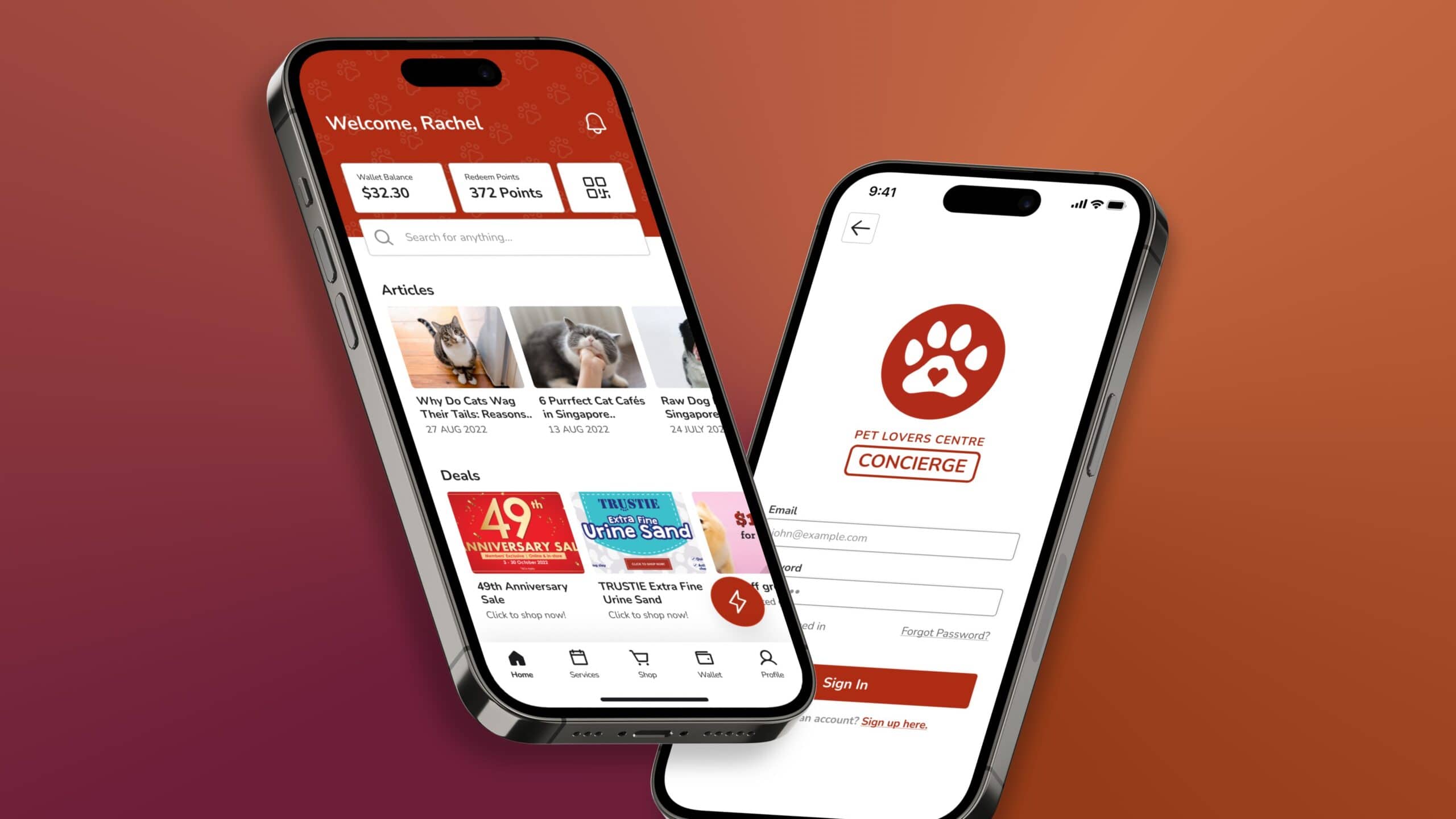
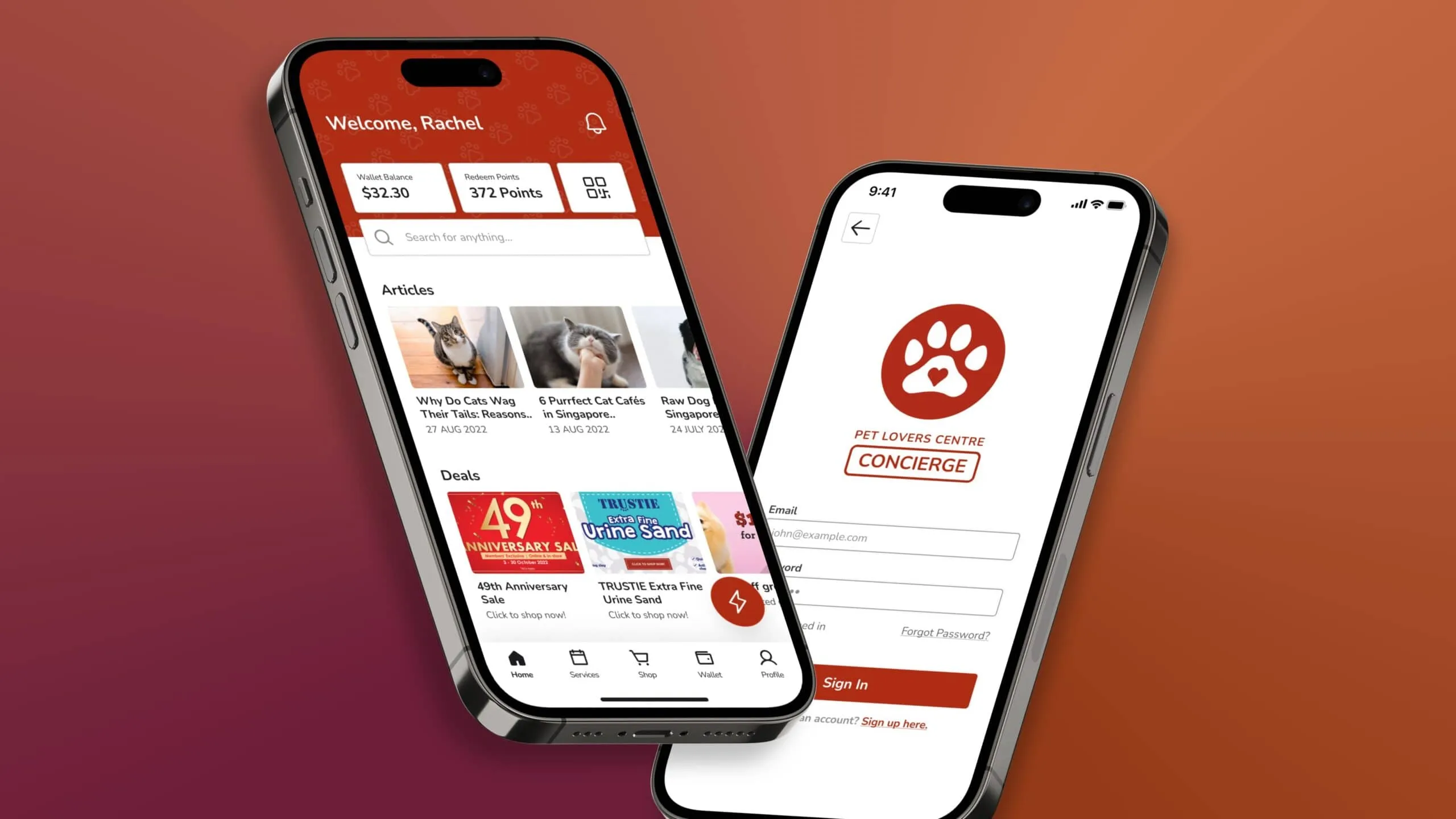
A home screen that earns its place
Wallet balance, loyalty points, curated articles, and current deals surface on the home screen — replacing the app's previous reliance on VIP-only access.
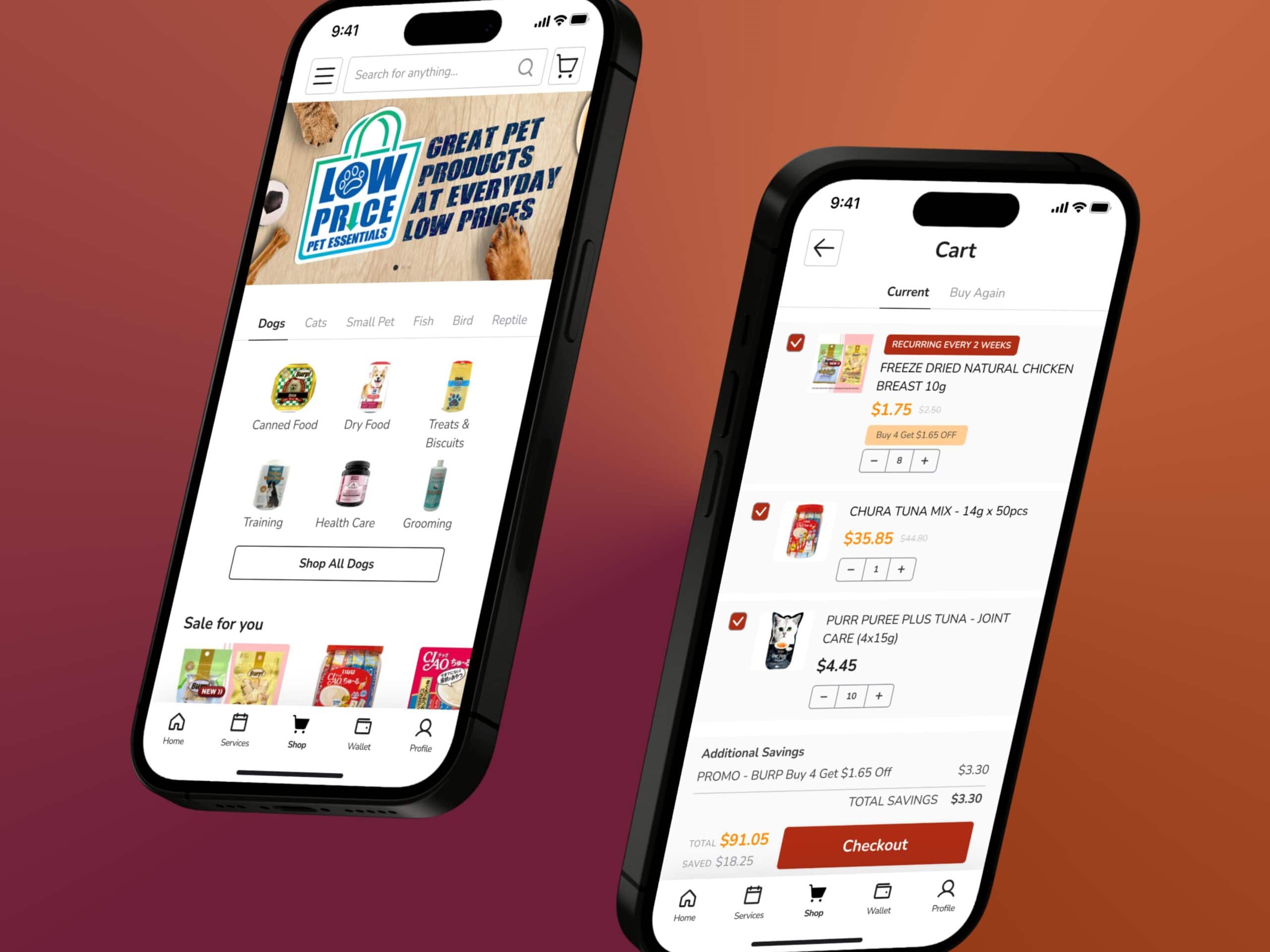
Shop without leaving the app
A native shop organised by pet type replaces the browser redirect. Recurring items are badged in the cart with auto-applied bundle savings surfaced before checkout.
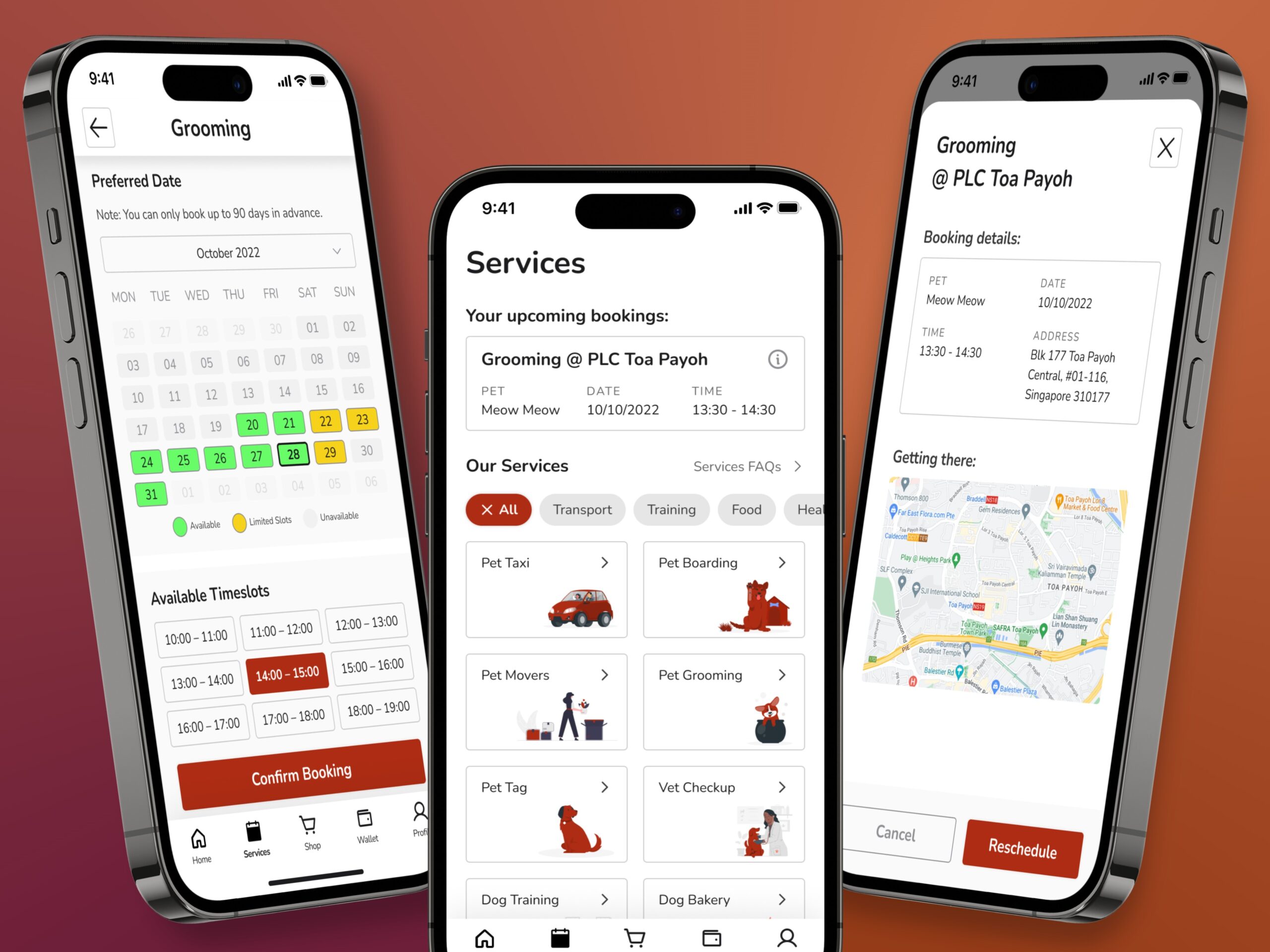
Book services in fewer taps
Upcoming bookings surface at the top of the services page. Chip navigation organises service categories, and a calendar with available time slots replaces the old manual entry flow.
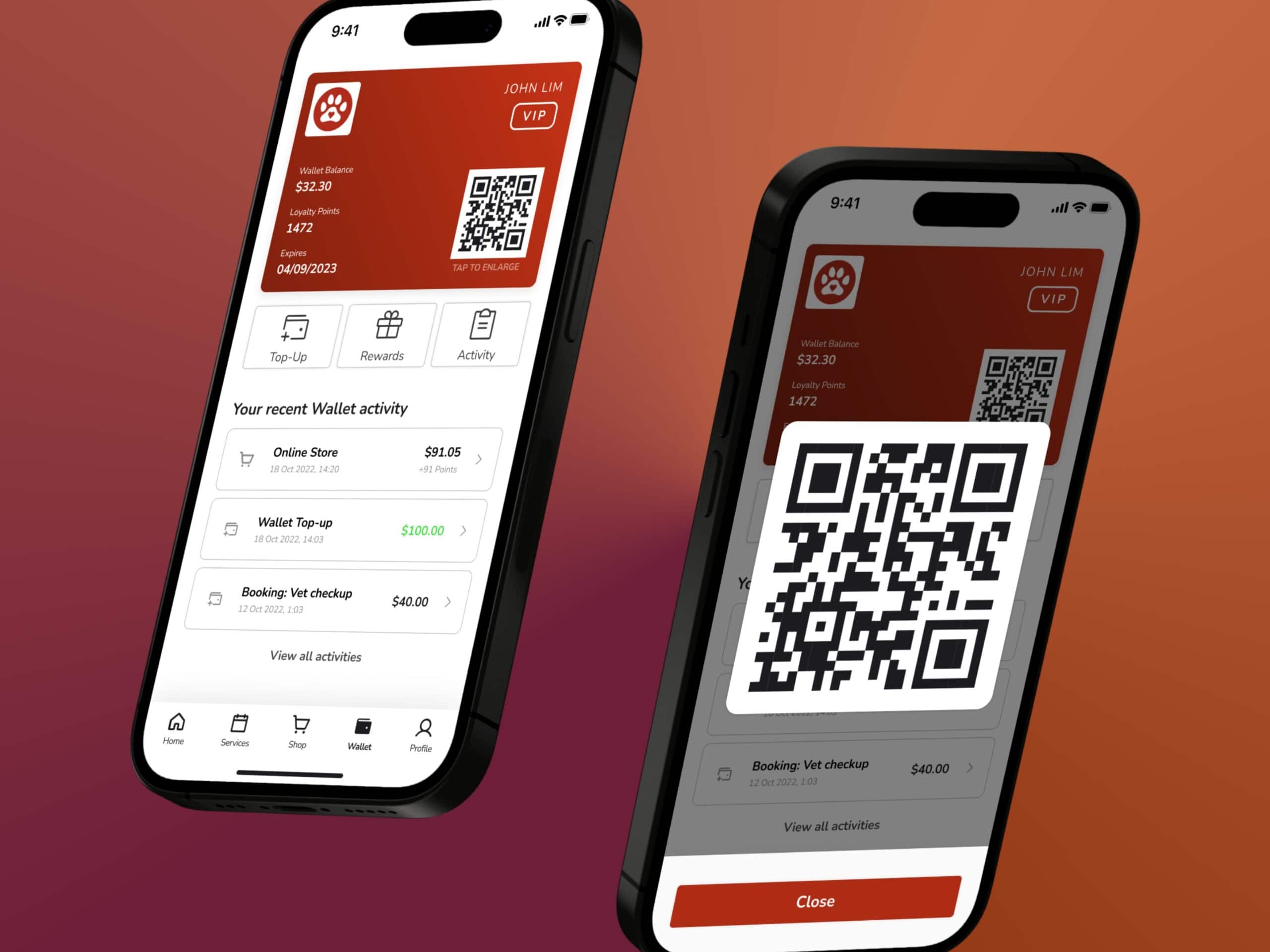
One wallet, everything in view
The VIP card, wallet balance, loyalty points, and transaction history are consolidated in a single screen. The QR code expands on tap for in-store use.
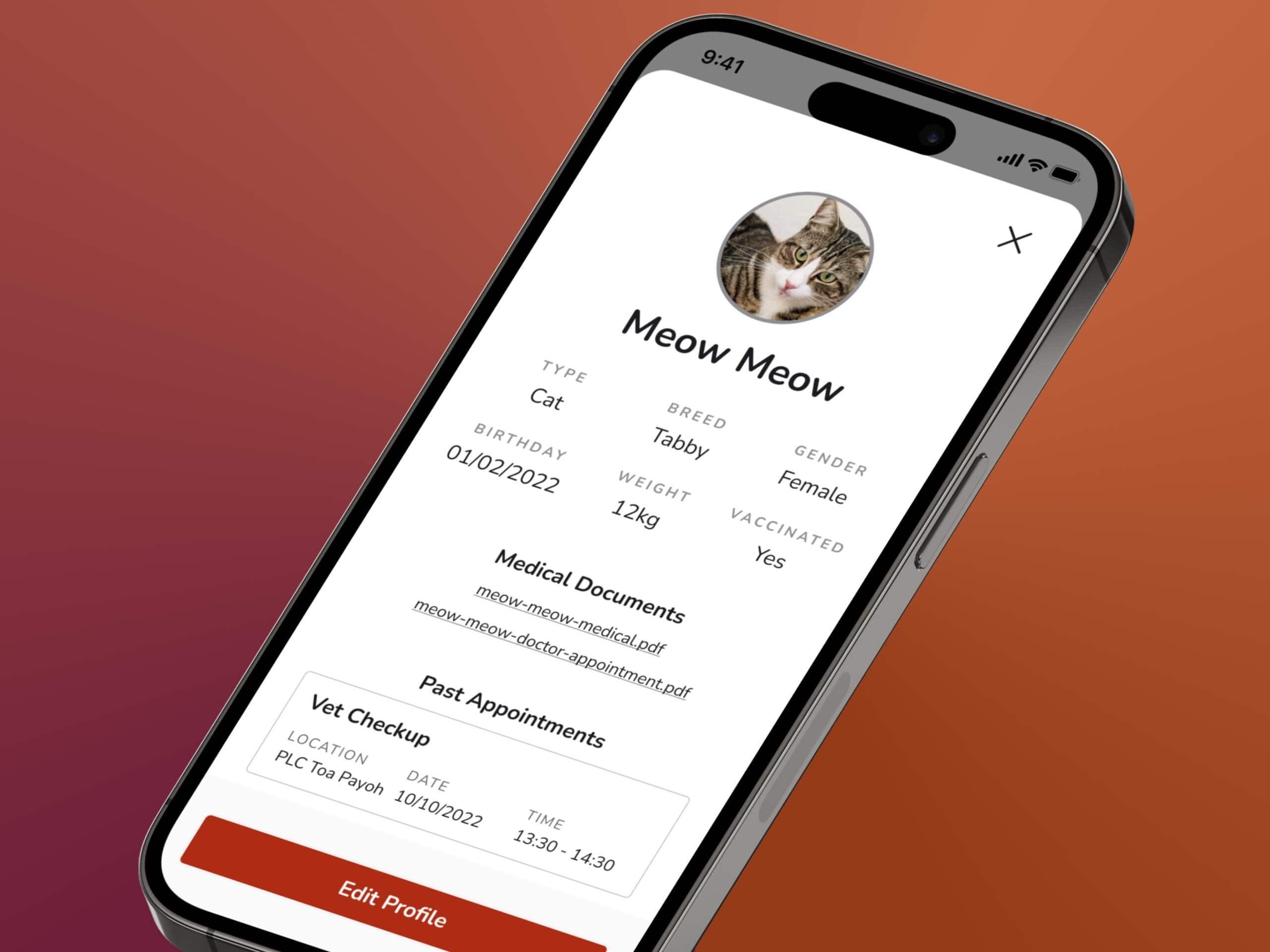
A medical home for every pet
Pet profiles store breed, weight, vaccination status, uploaded medical documents, and appointment history — giving owners and vets a shared, up-to-date reference.
Have at least 8 minutes? Read the case study below.
Pet Lovers Centre's app was gated behind a paid membership and sent users to a browser to shop. We redesigned it into an open, full-featured platform.
Unlocking mobile commerce. Pet Lovers Centre is Southeast Asia’s largest pet care retailer. Their legacy app—the VIP Concierge—locked core features behind a paid membership, redirected users to external browsers for purchases, and lacked recurring service bookings. We redesigned it into an open, native pet care companion.
Try the Figma Prototype
The high-fidelity prototype is available to explore in Figma. It covers the redesigned onboarding, native shopping, recurring purchase, service booking, wallet, and pet profile flows.
Try the Pet Lovers Centre Figma prototype →Context & Problem
Structural conversion blockers. Shoppers loved the physical retail stores but abandoned the mobile app. Gating basic actions behind an $8/year fee and forcing browser redirects for payments destroyed mobile conversion.
The problem
The VIP Concierge was structurally broken — not just visually dated.
The problems were not cosmetic. The app lacked features users needed, and what it did offer was difficult to access or withheld behind a paywall.
Shopping required leaving the app
Tapping 'Shop' launched an external browser with a separate login. Most users bypassed the app entirely and went straight to the website.
Service booking was fully manual
Every grooming or vet booking required entering pet details from scratch, with no recurring option and no way to view upcoming appointments.
No way to track pet health
There was no digital record for vaccinations, medical documents, or appointment history. Paper folders were the only option.
Loyalty and wallet required external redirects
Points redemption, voucher use, and balance top-ups all happened on separate external pages with no unified activity view.
The app was gated by a paid VIP membership
Core functionality required an $8/year subscription, limiting adoption before users experienced any product value.
Strategic Constraints:
- Zero shopping redirects: Integrate checkout and cart management natively inside the app container.
- Opt-in loyalty models: Reposition paid VIP tiering as a value upgrade rather than an access block.
- Dynamic health profiles: Enable digital storage for medical uploads and vaccination tracking.
The Process: Behind the Scenes
Grounded in quantitative pain. We surveyed 20 owners and ran qualitative interviews. The data showed that while 85% of respondents bought items online or in-store, only 15% used the app due to browser redirect friction.
- Rachel Seow (Secretary, Cat Owner): Constantly ran out of cat food and hated manual grooming rebookings.
- Damien Low (Student, Dog Owner): Struggled to manage health records for aging dogs across scattered paper folders.
- Natasha (Housewife, Multi-Cat Owner): Frustrated by re-entering pet details for every grooming appointment.
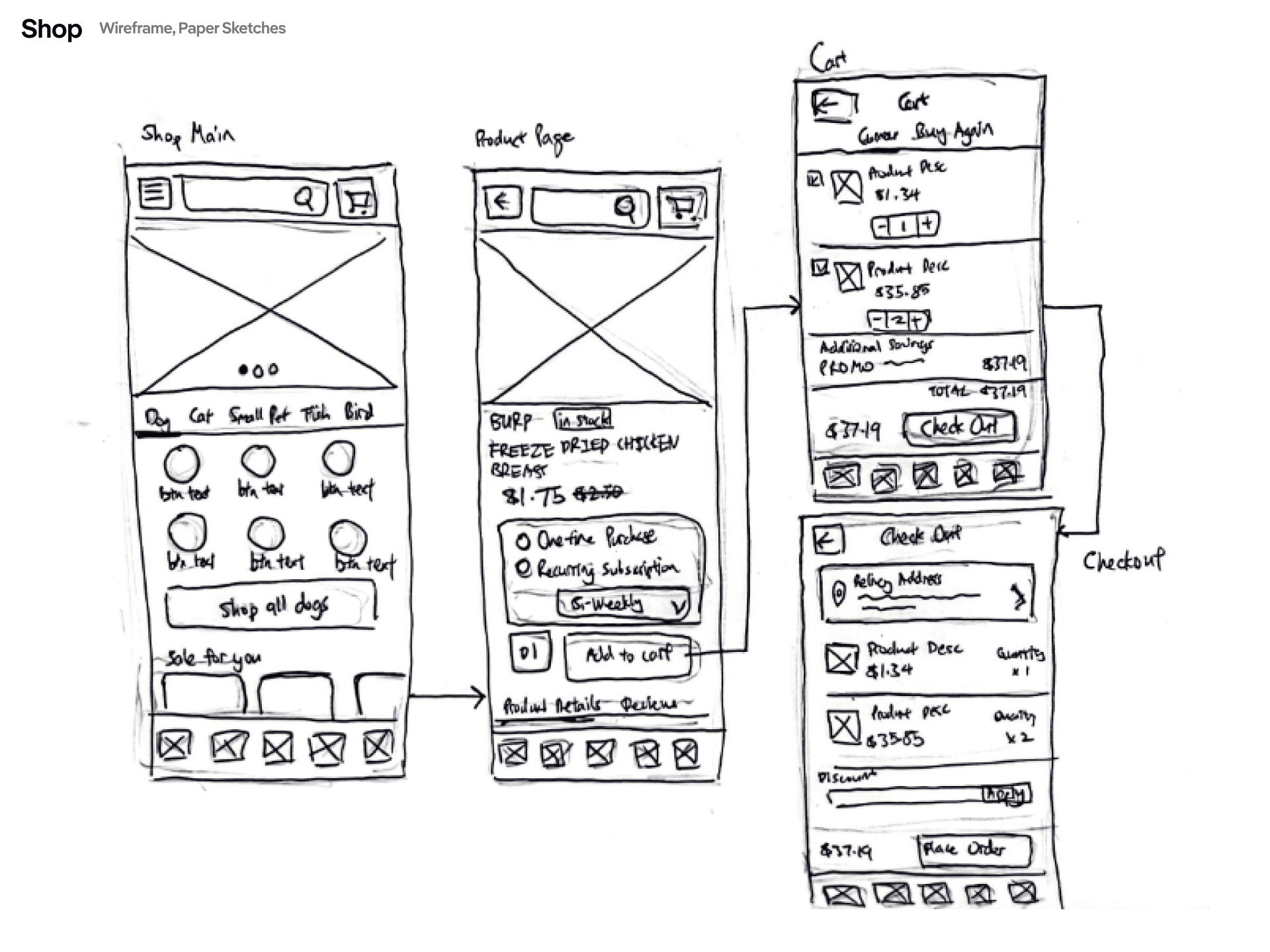
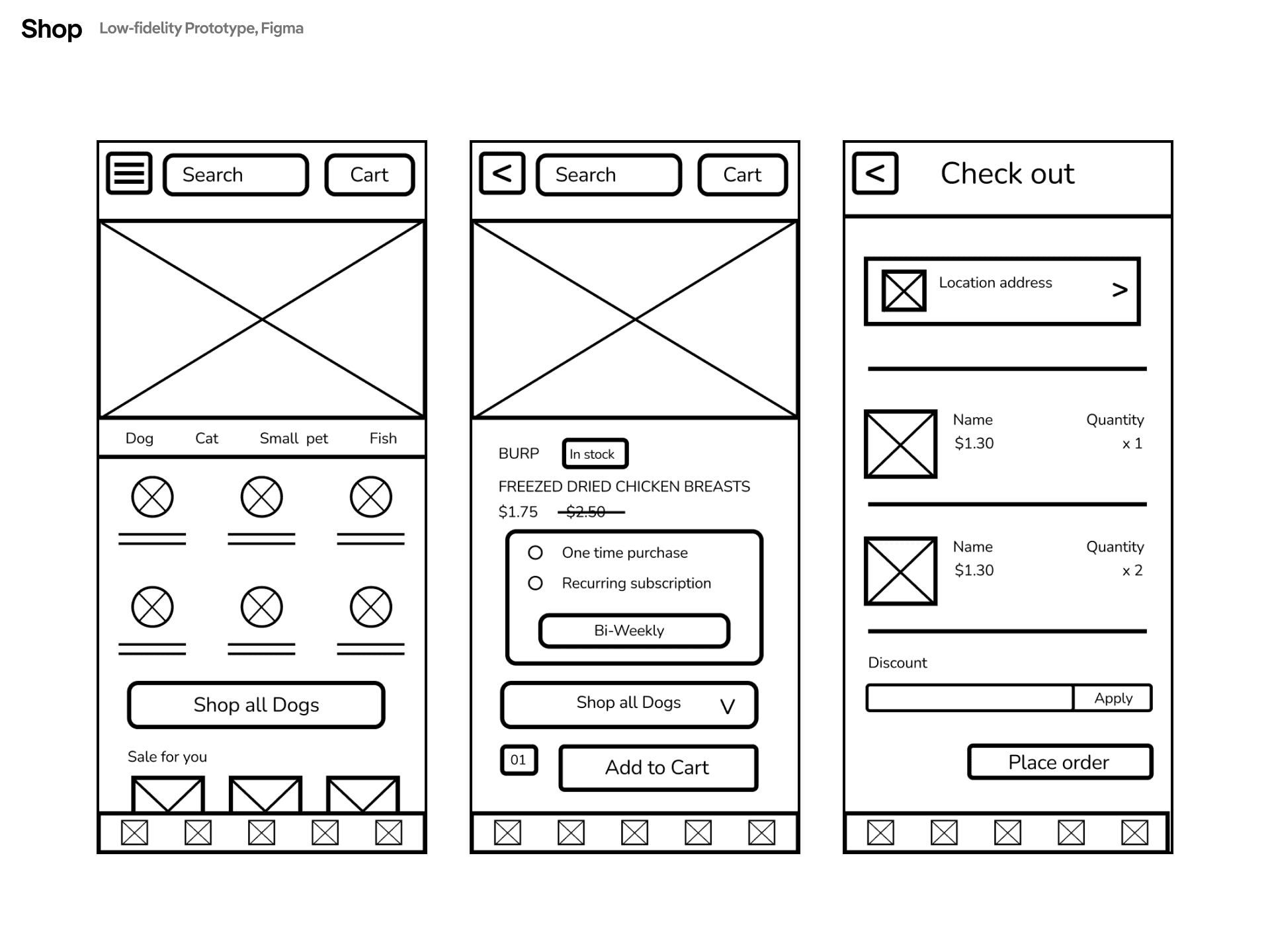
From paper sketches to digital structures. We used rough paper layouts to test the placement of native checkout flows before drafting low-fidelity Figma wireframes.
Deep Dive: Key Design Decisions
Open Home: Repositioning VIP Gating to On-Demand Registration
Driving product adoption. We eliminated paid registration barriers. The home screen welcome, curated pet care guides, and standard deals are open to all users. VIP membership is presented as a high-value upgrade (offering exclusive cashbacks and birthday gifts) rather than an entry gate.

In-App Shop: Driving Conversion via Native Subscriptions
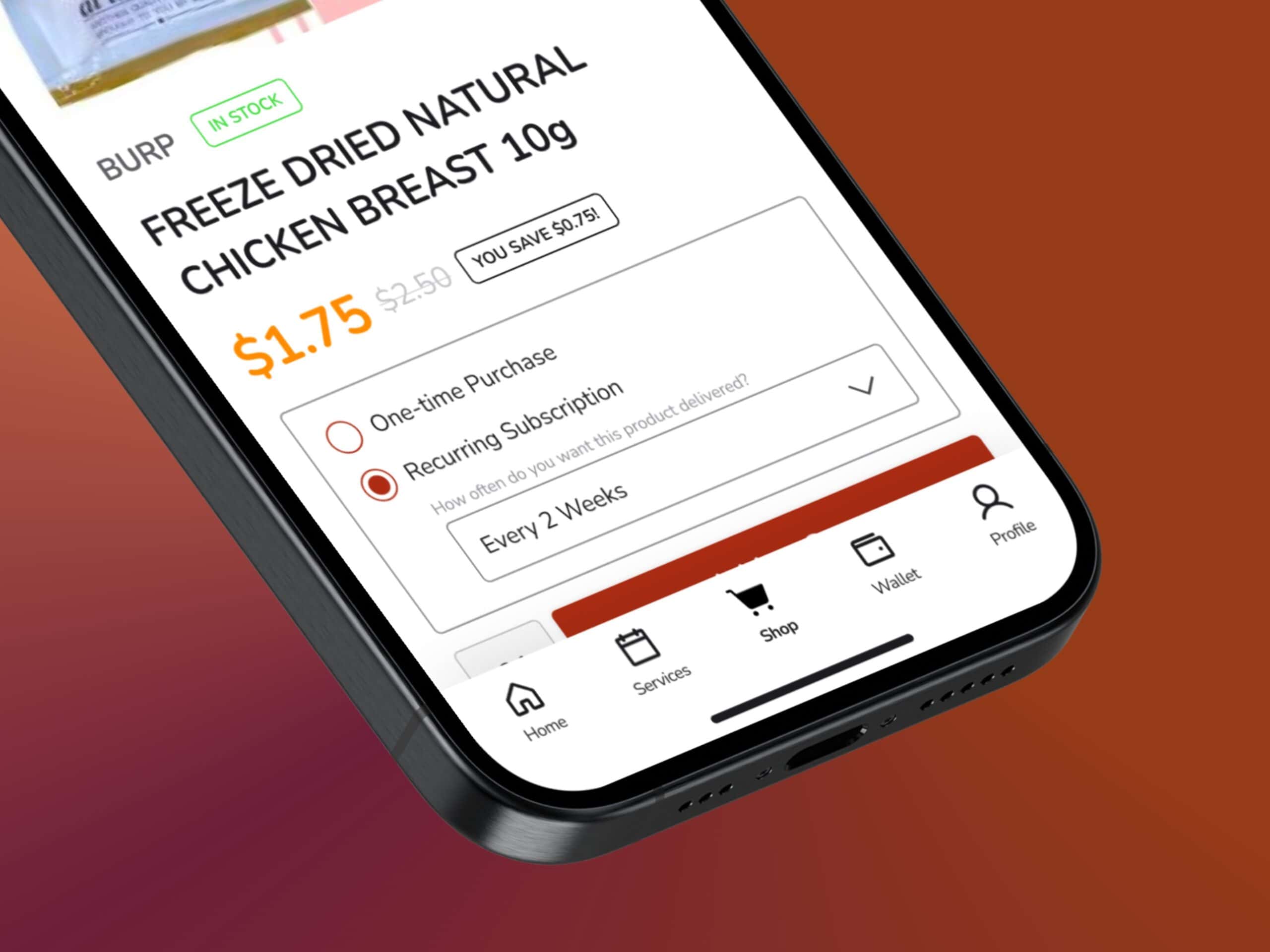
Increasing repeat purchases. Tapping “Shop” opens a native product catalogue organised by pet category. We embedded auto-ship scheduling directly on individual product screens, allowing owners to easily set recurring frequencies (e.g., fortnightly).
Smart Booking: Accelerating Appointments via Health Profile Sync
Streamlining service bookings. Upcoming grooming and vet visits are pinned to the top of the booking tab. For regular appointments, auto-fill pre-fills pet dimensions and medical alerts from stored profiles, reducing manual bookings to a quick confirmation.
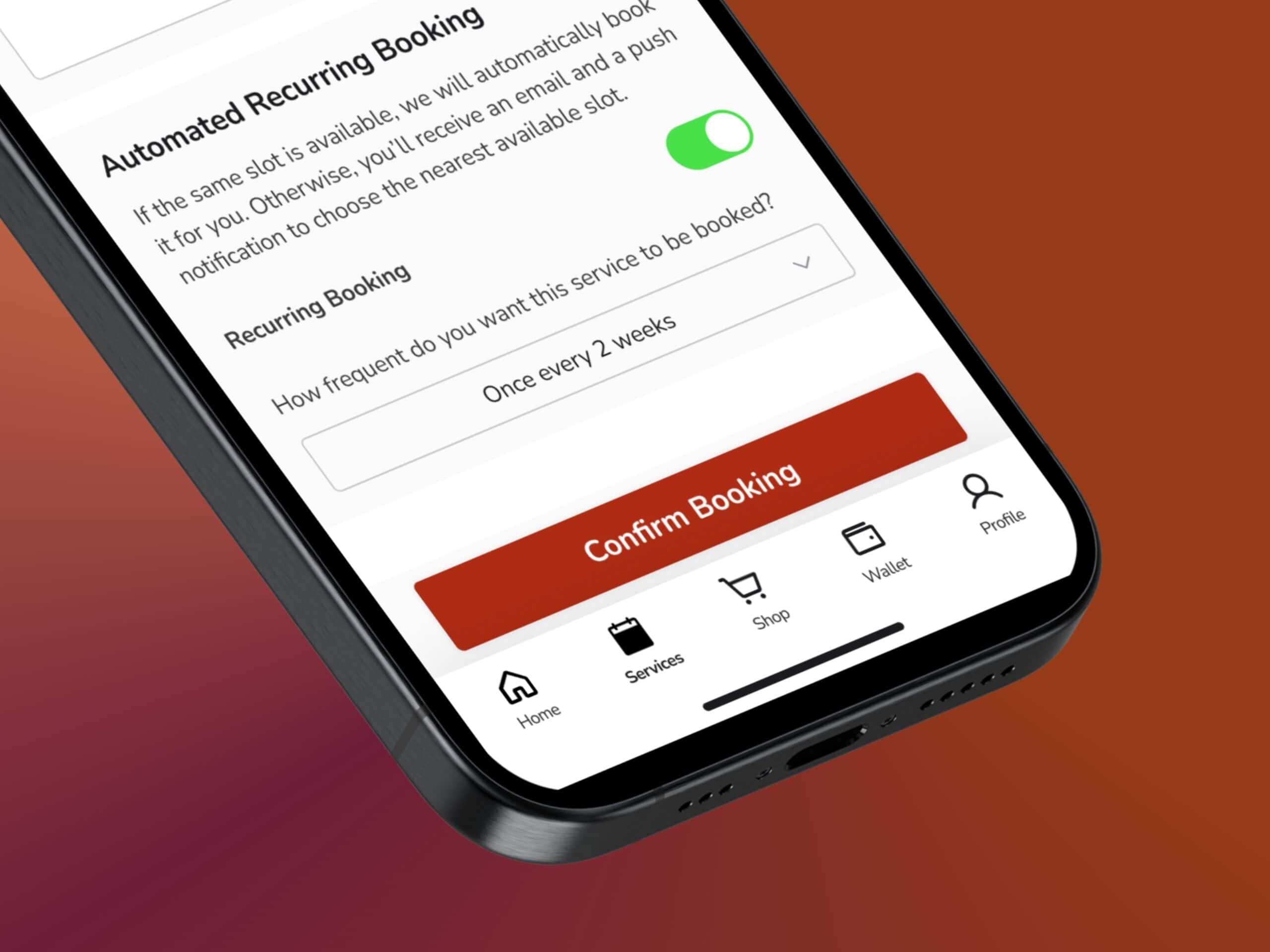
Automated repeating slots. We added a recurring booking toggle. If the requested slot is unavailable in a future cycle, the app proactively alerts the owner with alternative times, ensuring consistent service.
Unified Wallet: Consolidating Transactions and QR Scans
Optimising retail checkout. The native wallet organises VIP balances, transaction feeds, and loyalty points. The VIP membership card is prominent, with a tap-to-expand QR code optimised for quick scanning at physical checkout counters.
Health Profiles: Digitizing Medical Records
Providing diagnostic context. Owners can maintain individual profiles for multiple pets, storing breed metrics, vaccination timelines, and PDF medical reports, ensuring veterinary history is always accessible.
Impact & Outcomes
Validating structural conversion. High-fidelity usability testing confirmed a strong preference for native flows over legacy redirects, validating our functional product approach.
Project snapshot
Research drove the scope. Testing confirmed the direction.
88.9%
preferred the redesigned shop
Usability testing confirmed users overwhelmingly preferred in-app shopping over the original browser redirect.
100%
preferred the new home and services
Every tester found the redesigned home page and service booking more efficient and pleasant to use.
78%
wanted subscriptions and pet profiles
Recurring purchase options and medical record storage were the most-requested new features from survey respondents.
5
core sections redesigned
Home, Shop, Services, Wallet, and Profile — each reimagined with new functionality grounded in user research.
Before and after
Shopping
External browser with a separate login. Most users skipped the app entirely.
Native shop organised by pet type, with subscription options and auto-applied savings at checkout.
Service booking
Manual pet detail entry every time. No recurring option. No view of upcoming appointments.
Pet profiles auto-fill forms. Recurring toggle and calendar scheduling. Upcoming bookings always visible.
Pet health
No digital record. Vaccinations and medical history existed only on paper.
Per-pet profiles with document uploads, vaccination tracking, and appointment history.
Loyalty and wallet
Redemption and top-ups required external redirects. No unified activity view.
Centralised wallet with VIP card, in-app redemption, and full transaction history.
Access
Core features restricted to paid VIP members. Non-members hit a wall immediately.
Open to all. VIP repositioned as an optional upgrade with clear, genuine benefits.
Reflection
Prioritizing utility over styling. The initial design sprint was focused on a simple aesthetic skin update. However, user interviews quickly highlighted that a beautiful UI cannot save a broken functional model. Real value came from rebuilding the architecture: eliminating browser redirects and paid entry gates.
Competitive parity as a baseline. In modern retail landscapes, features like automated shipping, per-pet profiles, and unified wallets are basic consumer expectations rather than premium highlights. Benchmarking against digital-first competitors helped us identify and resolve key conversion gaps.
Contents